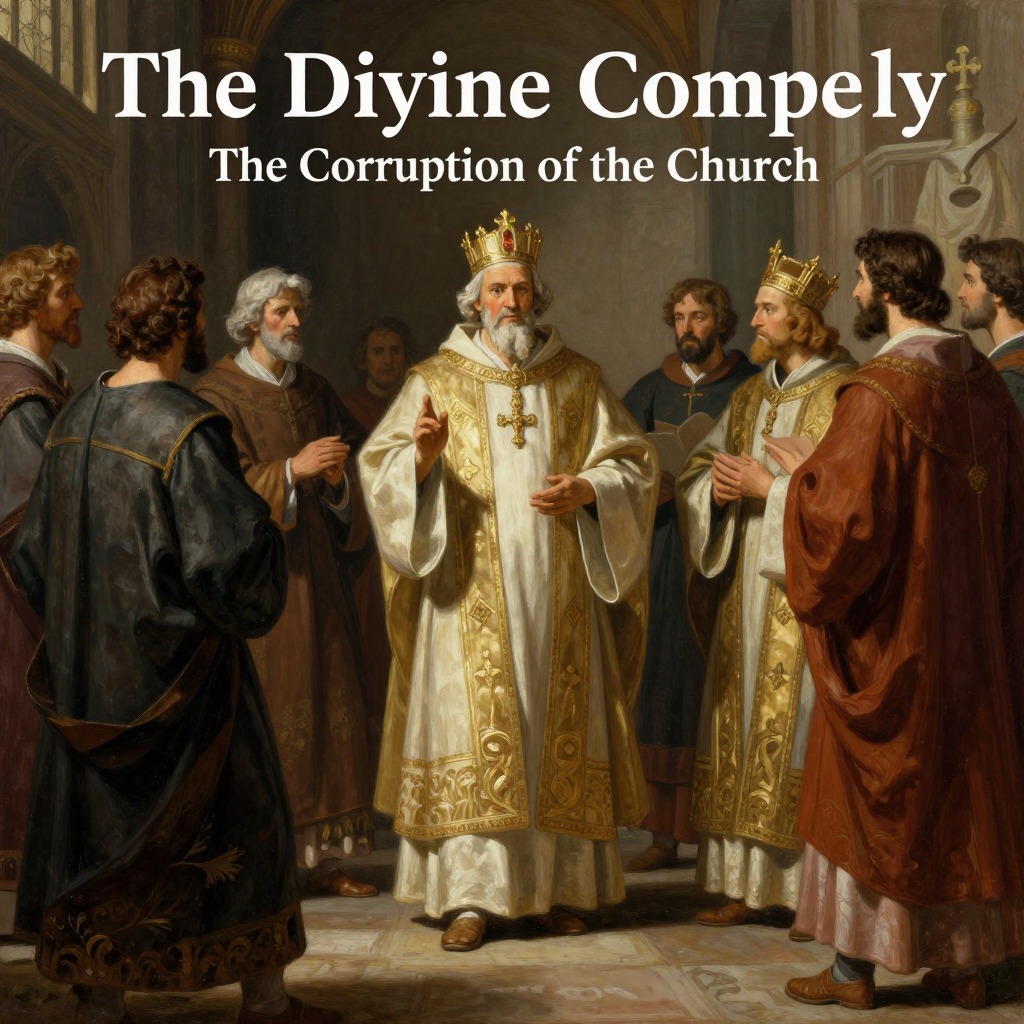
Caiaphas
Caiaphas, the Jewish high priest who justified the crucifixion of Jesus as a political expedient, endures a uniquely ironic punishment in the Sixth Bolgia of Malebolge, where the Hypocrites are tormented. He is not merely burdened by the gilded leaden cloaks that weigh down the other sinners; he is crucified to the path itself, stretched naked on the ground with three stakes, and forced to feel the full weight of every shade that treads upon him. His contrapasso transforms his own counsel—that it was expedient for one man to die for the people—into an eternal, physical reality: he is the one who is trodden underfoot, his body a perpetual bridge for the damned.
Identity and Background
Caiaphas was the high priest of the Sanhedrin who, according to the Gospel of John, advised the Pharisees that it was better for one man to die for the people than for the whole nation to perish. This counsel, given during the plotting against Jesus, is the defining act for which he is condemned in Dante's Hell. The poet presents him not as a figure of theological debate but as the archetypal hypocrite—one who cloaked a murderous political calculation in the language of pious sacrifice. His father-in-law, Annas, and the other members of the council that condemned Jesus are punished alongside him in the same moat, sharing in the malignant seed they sowed for the Jewish people.
Punishment in the Sixth Bolgia
In the Sixth Bolgia of the Eighth Circle, the Hypocrites move with agonizing slowness, wearing mantles that are dazzling gold on the outside but lined with crushing lead. Caiaphas, however, suffers a torment that surpasses even this. He is stretched out on the ground, crucified with three stakes, his body lying crosswise and naked across the path. Every soul that passes must step upon him, and he writhes and blows into his beard with sighs, feeling the full measure of each weight. The two Bolognese Frati Gaudenti, Catalano and Loderingo, who explain the scene to Dante, point out that Caiaphas must feel the weight of whoever passes, and that his father-in-law and the rest of the council are punished in the same manner. Virgil himself marvels at the sight of Caiaphas extended so vilely on the cross in eternal banishment.
Narrative Role and Thematic Significance
Caiaphas serves as the culminating example of hypocrisy in Dante's moral system. His sin is not merely personal deceit but the institutional perversion of justice—using the language of sacrifice to commit murder. The contrapasso is devastatingly precise: the man who argued that one man should be sacrificed for the many is now himself the one upon whom all others tread, a literal pavement for the damned. His punishment also reflects Dante's broader critique of the corruption of religious authority, a theme that runs throughout the Inferno and intensifies in the Malebolge. The presence of Caiaphas, Annas, and the entire council in Hell underscores the poet's view that the highest religious offices, when twisted by political expediency, become the deepest sources of damnation. Virgil's wonder at the sight suggests that even the pagan guide, who has seen every horror of Hell, finds something uniquely striking in this image of a religious leader literally crushed by the weight of his own hypocrisy.